Snorkeling Tours Playa Del Carmen
Playa del Carmen is one of the few beach towns in Mexico where two entirely different kinds of snorkeling sit within an hour of your hotel: freshwater cave cenotes inland and coral reef offshore. This guide compares the two honestly, tour by tour, price by price.
Short answer
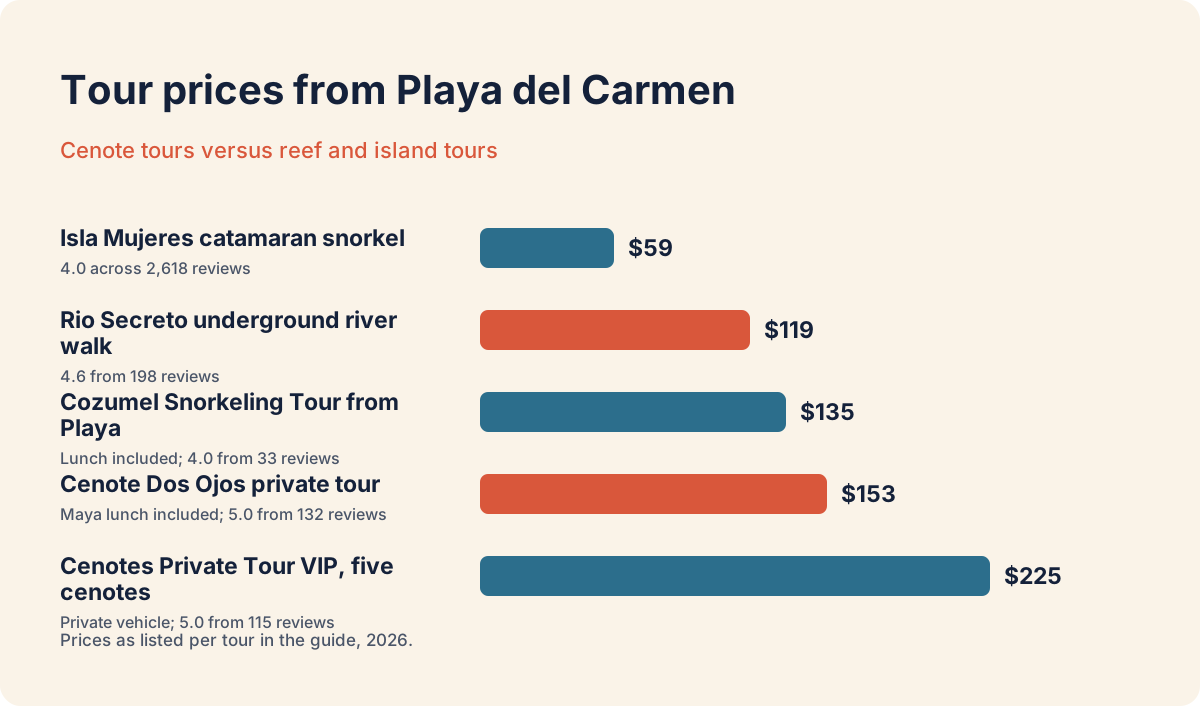
Playa del Carmen offers cenote snorkeling (Dos Ojos from $153, Rio Secreto from $119), reef snorkeling by ferry to Cozumel (from $135), and the Isla Mujeres catamaran (from $59, 4.0 from 2,618 reviews). The reef ferry crossing takes about 45 minutes each way; cenotes are 15 to 40 minutes inland.
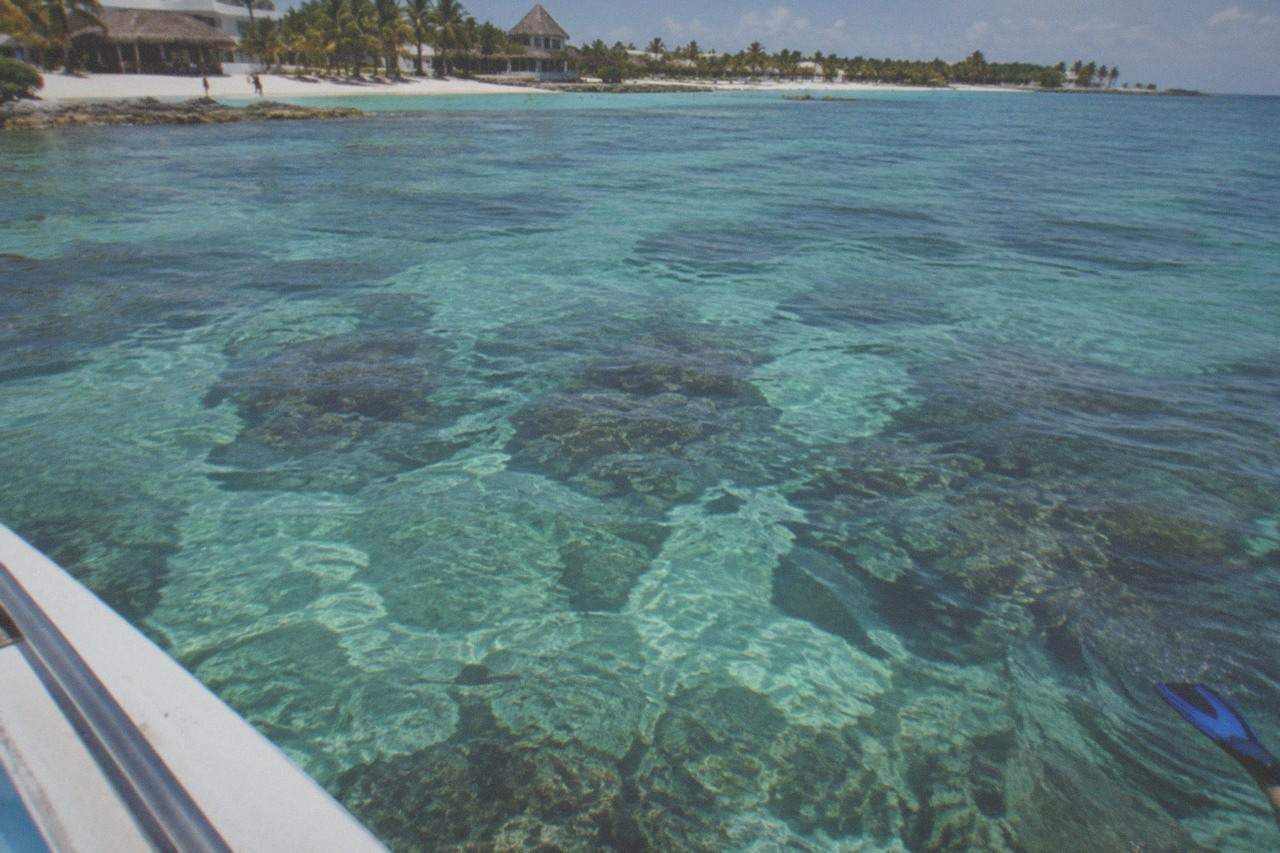
Playa del Carmen's own beach is a launching pad, not the destination. The town's shoreline faces a stretch of coast where the reef sits too far out to swim to, and in 2026 sargassum has made the in-town water unpredictable on top of that. The real snorkeling happens in two directions: inland, into the freshwater cave systems the Maya called cenotes, and offshore, on the Mesoamerican Barrier Reef reached by ferry to Cozumel or by catamaran to Isla Mujeres. That split is the single most useful way to think about booking. Once you know whether you want freshwater caves or saltwater coral, the choice of tour almost makes itself.
This guide compares the three families of snorkel products you can book from Playa del Carmen: cenote tours, reef day trips to Cozumel, and catamaran tours to Isla Mujeres. Prices and review figures below come from each tour's live listing, and entry fees, ferry fares and seasonal conditions come from verified local sources. Where a number moves, the text says so plainly rather than pinning a false fixed figure on it.
What Does Snorkeling From Playa Del Carmen Actually Look Like?
Playa del Carmen sits between two completely different snorkeling worlds: the freshwater cave cenotes 15 to 40 minutes inland, and the coral reef reached by a 45-minute ferry crossing to Cozumel or a catamaran run to Isla Mujeres. Most visitors fit one reef day and one cenote day into a week, and that pairing covers the region well.
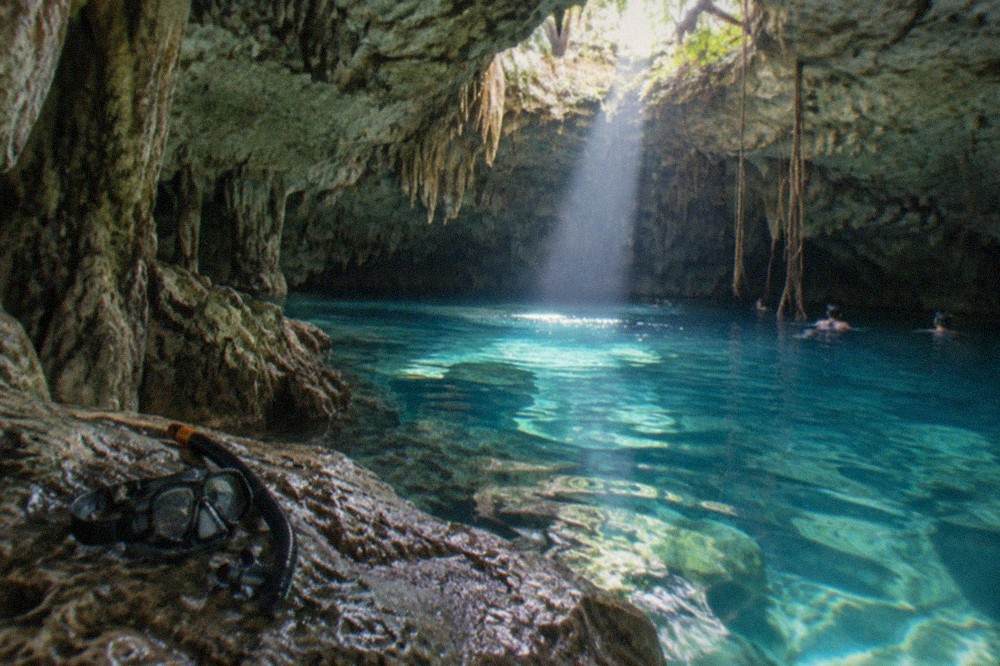
The cenote side is geology. The Yucatan Peninsula is a limestone shelf with almost no surface rivers, so rain filters down through the rock and pools in thousands of sinkholes, caverns and underground rivers. Snorkeling there means crystal water with visibility that regularly exceeds what open ocean offers, dramatic rock formations, shafts of daylight dropping through cave openings, and small freshwater fish rather than coral. Water temperatures hold steady year-round, and there is no current and no waves. For nervous swimmers, children, or anyone who wants a guaranteed-clear swim regardless of weather, cenotes are the safer bet.
The ocean side is biology. The Mesoamerican Barrier Reef runs south of Cozumel and around Isla Mujeres, and it holds turtles, rays, angelfish, parrotfish and the whole living texture of a coral system. Visibility depends on wind, current and sargassum, so a good operator matters more than a good date. What the ocean gives you that cenotes cannot is scale and wildlife: reef structures the size of buildings, and animals that choose to be there.
A third lane exists for people who want snorkeling as part of a bigger day out. The Isla Mujeres catamaran packages a short snorkel stop into a beach-club day with lunch and an open bar, and several cenote tours bundle snorkeling with ruins, a Maya lunch or ziplines. If snorkeling is the main event, book the dedicated tours. If it is one ingredient, the bundles give better value.
Cenote Snorkeling Or Ocean Snorkeling: Which Should You Choose?
Choose cenote snorkeling for guaranteed clear water, no waves, steady temperature and dramatic caves; it suits families and uncertain swimmers. Choose ocean snorkeling for coral, turtles, rays and fish on an actual reef, accepting that wind and sargassum can change visibility. Price is similar, roughly $119 to $225 versus $59 to $135, so the water type decides it.
The honest trade-off is predictability against richness. A cenote delivers its best version almost every day of the year. The reef delivers its best version on calm days and can deliver murk on rough ones, though good operators shift to sheltered sites when conditions turn. Neither is the "real" snorkeling: they are simply different sports that share a mask.
| Cenote snorkeling | Reef / ocean snorkeling | |
|---|---|---|
| Water | Fresh, still, cave-filtered | Salt, current and wind dependent |
| Visibility | Very high most days | Good to poor, varies by day |
| What you see | Rock formations, light shafts, small fish, bats in some caves | Coral, turtles, rays, tropical fish |
| Best for | Families, nervous swimmers, photographers | Wildlife watchers, confident swimmers |
| Weather risk | Essentially none | Wind, waves, sargassum season |
| Typical tour price from Playa | $119 to $225 | $59 to $135 |
| Time from Playa del Carmen | 15 to 40 minutes | Ferry crossing of about 45 minutes, plus transfer |
If you are traveling with children under about eight, or with anyone who panics in open water, start with a cenote. The complete absence of waves and current makes the mask-and-fins learning curve gentle. If your group has snorkeled before and the point of the trip is marine life, go to Cozumel's reefs: Palancar and Colombia, on the island's southwest coast, are the two names that come up again and again in local dive-shop talk, with Palancar noted for massive coral formations and swim-throughs and Colombia for turtle sightings and dramatic walls.
Sargassum is the wildcard on the ocean side, and 2026 has been a heavy year. The seaweed arrived early and peaked in summer, and state monitoring through late September still registered it on most monitored beaches, though volumes dropped sharply from August levels and were expected to keep easing into October and November. Reef trips that run offshore or target the island's leeward sites are far less affected than town-beach swimming. If your dates are flexible and the sea matters, the November to April window is the reliable one.
There is no rule that says you must pick one lane. A standard week fits a cenote morning and a reef day comfortably, and the two experiences share zero scenery. The trio below is the quickest way to see the price spread across cenote, reef and catamaran formats before reading the detail sections.
Which Cenote Snorkel Tours Are Worth Booking From Playa Del Carmen?
Three cenote products stand out from Playa del Carmen: the Cenote Dos Ojos private tour with Maya lunch at 5.0 from 132 reviews, from $153; Rio Secreto's guided underground river walk at 4.6 from 198 reviews, from $119; and the Cenotes Private Tour VIP, a five-cenote private day at 5.0 from 115 reviews, from $225. Each targets a different traveler.
Dos Ojos is the region's signature cenote, a two-eye cave system north of Tulum with a snorkel circuit through cavern passages and a famous Bat Cave section. Going private changes the character of the day: you travel on your own schedule, and the operator pairs the snorkel with a traditional Maya lunch, which most shared cenote runs skip. The 5.0 rating across 132 reviews is a strong record for this category, and the $153 starting price is mid-band for a private cenote format. Independent entry at Dos Ojos itself runs roughly $20 to $24 per person for basic access, with guided snorkel circuits around $38, so the private tour's premium buys the guide, the lunch and the logistics rather than the water itself.
Rio Secreto is a different animal: less a swim than a guided walk and float through an underground river with formations that have taken shape over geological time. The 4.6 rating from 198 reviews sits slightly lower, which matches its more physical, cave-focused format. It suits travelers who want the underworld without needing to be confident swimmers, since much of the route is wading and floating in a life vest.
The Cenotes Private Tour VIP is the splurge lane: a private vehicle, multiple cenotes in one day, and a 5.0 record from 115 reviews at from $225. That format earns its price mainly for groups of three or more, where the per-person gap to a shared tour narrows while the flexibility widens considerably.
A few practical notes apply to every cenote. Most managed sites prohibit conventional sunscreen outright, or require a rinse-off shower before entry, and the rule is enforced at the gate rather than politely ignored. Bring cash: several sites, including popular open cenotes near the highway, are cash-only for entry and rental. Life jackets are mandatory at most sites, and the better tours include them rather than renting. Our cenote tours from Playa del Carmen guide covers the full site-by-site fee picture, including which cenotes close on Saturdays.
For context on what is available if you drive yourself, Cenote Azul near the highway charges around $7 per adult in cash, Jardín del Edén runs roughly $10 to $15 and closes Saturdays, and Chaak Tun near town requires its guided tour at roughly $50. Those self-drive prices are why booked cenote tours concentrate on the private and multi-stop formats: the value is in the guide and the vehicle, not the entry fee.
Where Do You Snorkel On The Reef: Cozumel Day Trips Explained
Reef snorkeling from Playa del Carmen means crossing to Cozumel, about 45 minutes by ferry each way, then snorkeling sites such as Palancar and Colombia on the island's sheltered southwest coast. The Cozumel Snorkeling Tour from Playa del Carmen runs from $135 with lunch included, at 4.0 from 33 reviews, a small pool worth knowing about.
That review count needs to be said plainly: 33 reviews is a genuinely small sample, so treat the rating as directional rather than decisive. The format itself is the strongest argument for it. You are collected in Playa del Carmen, the ferry crossing is handled for you, and the boat day includes lunch, which matters because Cozumel's better reefs sit well south of downtown and a self-managed version eats the whole afternoon in logistics. The operator's live listing carries the current itinerary and departure point.
The do-it-yourself alternative is real and cheaper. Ferries run roughly every 30 to 60 minutes between roughly 7 AM and 10 PM, operated by Ultramar and Winjet, with one-way adult fares around $12 to $22 depending on operator, class and whether you book online; a detailed schedule is maintained at the Cozumel ferry schedule reference. Once across, walk-on snorkel boats depart from the piers in San Miguel and typically visit two or three reef sites. What the DIY route costs you is certainty: on a rough day, finding which boats are running and which sites are workable is exactly the problem a tour operator solves before you leave the mainland. Our Cozumel day trip guide maps the full self-guided version, including pier geography.
Cozumel's west coast holds a structural advantage for snorkelers: it faces the sheltered leeward side of the island, so the same wind that turns Playa del Carmen's beach brown often leaves Palancar and Colombia diveable. That is why so much of the region's reef snorkeling routes through Cozumel rather than straight off the mainland.
The booking decision here is genuinely a fork. If your trip has one snorkel day in it and you want the reef, the guided day trip removes every moving part.
If you have two or more days and enjoy ferry independence, the DIY crossing plus a local boat is the budget route, and it lets you spend the afternoon in San Miguel.
What About The Isla Mujeres Catamaran Snorkel Option?
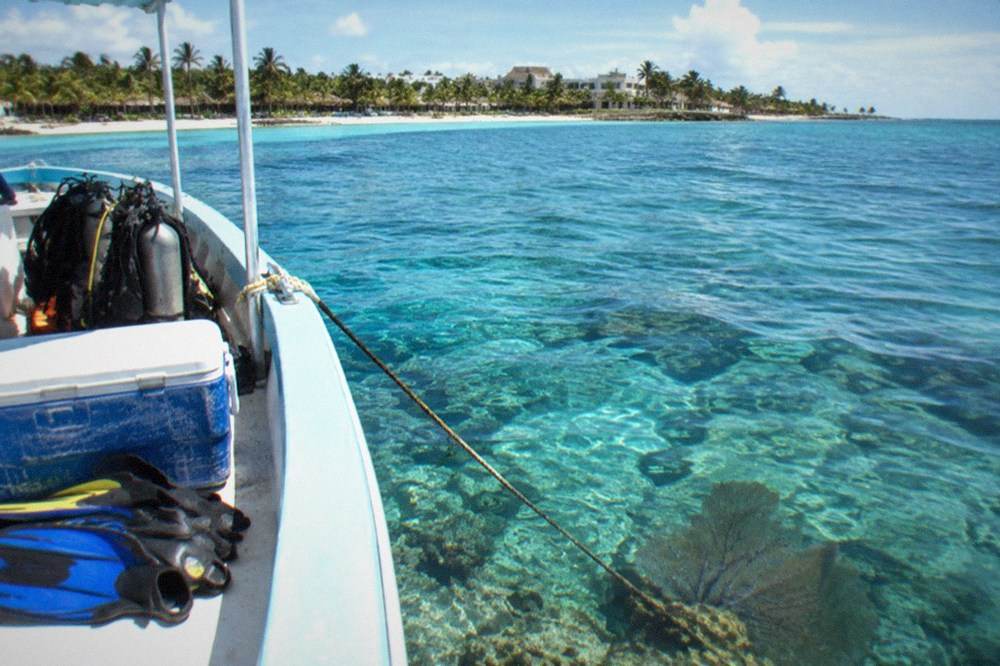
The Isla Mujeres catamaran, from $59, is the region's best-selling tour format by review count, 4.0 across 2,618 reviews, but the snorkel stop is one ingredient in a party-style beach-club day with open bar and lunch, not the focus. Book it for the day out, not for serious snorkeling.
Both halves of that record deserve equal weight. A 4.0 rating across 2,618 reviews is an enormous, credible sample, and the price of $59 for a catamaran day with lunch, beach club, snorkel stop and open bar is genuinely low against every other product in this guide. But a 4.0 average over that many guests also tells you what to expect: a big-boat, social-format day with real crowds, on island time. Travelers who arrive expecting an intimate reef encounter are the ones who leave the disappointed reviews.
The snorkeling itself happens on the crossing or near the island, typically at a shallow reef site, with gear provided and crew in the water. It is a fine first snorkel and a fun one in company. It is not Palancar. Reading it honestly: this is the tour to book when the group wants a shared adventure and the mask is optional equipment. Travelers whose whole goal is underwater time should book Cozumel or a cenote and treat Isla Mujeres as a separate beach-day idea; our catamaran tour from Playa del Carmen guide covers the format in full, including the alternatives to the big open-bar boats.
One more placement note: Isla Mujeres sits off Cancun's north end, so the transfer from Playa del Carmen is longer than the Cozumel crossing, and most departures leave early. Plan a slow morning the day after.
What Does A Snorkeling Trip Cost Once You Add Everything Up?
Tour headline prices run from $59 (catamaran) to $225 (private cenotes), but the true day cost adds ferry fares of roughly $12 to $22 each way for reef trips, or entry and rental fees of roughly $7 to $50 per cenote for self-drive visits, plus tips. A booked reef day from Playa lands around $135; a booked cenote day around $119 to $225.
The number that surprises people is the gap between a tour's sticker price and a self-drive cenote day. Two people driving themselves to Cenote Azul spend under $20 on entry and can be back by lunch. The same two people on a private Dos Ojos tour from Playa spend over $300. That gap buys a guide, a vehicle, and in the private tours' case, a much better version of the experience. Whether it is worth it depends entirely on whether you want to drive, park and negotiate in Spanish, or step into an air-conditioned van.
| Cost item | Typical range | Notes |
|---|---|---|
| Cozumel snorkel tour from Playa | From $135 | Includes ferry logistics and lunch; 4.0 from 33 reviews |
| Cozumel ferry, self-booked | ~$12 to $22 each way | Ultramar or Winjet; every 30 to 60 minutes |
| Isla Mujeres catamaran | From $59 | Lunch, beach club, snorkel stop, open bar; 4.0 from 2,618 reviews |
| Dos Ojos private tour | From $153 | Private format, Maya lunch; 5.0 from 132 reviews |
| Rio Secreto guided tour | From $119 | Underground river route; 4.6 from 198 reviews |
| Cenote self-drive entry | ~$7 to $50 | Azul ~$7; Jardín del Edén ~$10 to $15; Chaak Tun guided ~$50 |
| Life vest and gear rental (self-drive) | ~$2 to $4 per item | Usually included on tours, cash at many sites |
One planning item that belongs in the budget and is often forgotten: the Quintana Roo visitor tax, paid separately online. It is a small fixed amount per foreign visitor, and it is generally not bundled into airfare or tour prices, so it is worth handling before departure day rather than at the airport.
When Is The Best Time Of Year To Snorkel From Playa Del Carmen?
Cenote snorkeling is good all year because conditions underground never change. Ocean snorkeling is best from November to April, the dry season, when winds ease and sargassum is at its lowest; 2026 was a heavy sargassum year with a sharp decline in September. Hurricane season officially runs June 1 to November 30, peaking August to October.
The underground-water point cannot be overstated. A cave cenote at a constant temperature, with no current, no waves and no seaweed, is identical in February and July. If your trip falls in the sargassum-heavy summer months, a cenote day is not a consolation prize, it is the correct booking. The ocean, by contrast, runs on a real seasonal clock: rougher wind in the winter dry season can churn the surface even while beaches are clean, while the late-summer calm can pair beautiful flat water with the worst seaweed months. Reef operators work around it, but the leeward Cozumel sites buy you the most margin in any season.
For the official framing of the tropical calendar, the Atlantic hurricane season is June 1 to November 30 with peak activity August through October, per NOAA's hurricane climatology reference. Practically for a snorkel trip: a November-to-April booking needs no seasonal hedging at all, and a June-to-October booking should include one inland day as weather insurance.
| Period | Cenote conditions | Ocean conditions | Sargassum risk |
|---|---|---|---|
| November to April | Excellent, steady | Calm to moderate wind | Low, the clean window |
| May to July | Excellent, steady | Often calm | Rising to peak |
| August to October | Excellent, steady | Flat when no storm systems | High, easing late |
| On a rough day | Unaffected | Operators reroute or cancel | Independent of season |
The state of the water this season
What Rules And Logistics Should You Know Before You Go?
The three rules that actually stop people at the gate: conventional sunscreen is refused at most managed cenotes, so bring mineral-based only or none; life vests are mandatory at cenotes and at Akumal's protected turtle zone; and Cozumel ferry crossings take about 45 minutes each way, so reef days need an early start. Get those right and the rest is packing.
The sunscreen rule is the one with teeth. It is not one uniform state law but a widely enforced site-specific requirement at managed cenotes, marine parks and protected coastal areas across Quintana Roo, aimed at keeping oxybenzone and octinoxate out of fragile freshwater and reef systems. At many sites, the choice is binary: mineral or biodegradable sunscreen, or a rinse-off shower and none at all. Buying reef-safe sunscreen in Playa del Carmen is possible but expensive, so pack it at home.
Vest rules follow the same pattern. At cenotes, vests are mandatory for snorkelers at most sites and included with better tours. At Akumal Bay, if a turtle swim is on your radar, know that the protected zone requires a CONANP-authorized local guide, a maximum of six swimmers per guide, a roughly three-meter distance from turtles, time caps around 45 to 55 minutes, and no touching; the federal notice governing the swim is published by CONANP. Note also that turtle-swim tours pause in September each year as part of the bay's conservation calendar, so confirm availability before building a trip around it, and see our Akumal turtles tour guide for the current picture.
Logistics round out the list:
- Bring cash in pesos for cenote entries, gear rentals and tips; several popular sites are cash-only and card surcharges appear elsewhere.
- Confirm the tour's pickup window the night before; reef departures need the early ferry, and catamaran tours leave from marinas north of town.
- A towel and dry bag earn their space; many cenote tours include a lunch stop with no shop nearby.
- If you snorkeled on a rough day, remember the mask-defog trick works with baby shampoo, which is reef-safe where dish soap is not.
One safety footnote for orientation rather than alarm: the US State Department rates Quintana Roo at Level 2, exercise increased caution, which is about awareness after dark in downtown zones rather than a comment on tour areas or the water. Booked tours with licensed operators remain the standard way visitors experience all three snorkel lanes, and the operational side of the region's tourism is built around exactly that.
How Do You Choose Between The Three In One Sentence Each?
Book the Cozumel day trip if the reef and its wildlife are the point; book the Dos Ojos private cenote if you want guaranteed clear water, caves and a relaxed family pace; book the Isla Mujeres catamaran if the day out, the lunch and the open bar matter as much as the water. Two days? Pair Cozumel with a cenote.
That is the whole decision tree compressed. The price spread across the three formats is narrower than the experience spread, and this site's Tours in Playa del Carmen roster exists precisely because the differences between formats, not the price tags, are what travelers regret getting wrong.
If you are still torn, weight it by group. Confident adult swimmers who want animals: Cozumel. Mixed abilities, kids or grandparents: a cenote. A group of friends celebrating something: the catamaran, with expectations set for a party boat. Solo travelers and photographers: the private cenote formats, which move at your pace.
Before the closing questions, here is the full three-format spread one more time, priced side by side: the reef day, the private cenote and the catamaran, as covered above.
Common Questions About Snorkeling Tours
Can you snorkel right off the beach in Playa del Carmen?
Not reliably. The reef sits well offshore, the town beach has no walk-in snorkel zone, and sargassum in 2026 has made in-town water unpredictable. Snorkelers cross to Cozumel or Isla Mujeres, or head inland to cenotes.
Which is better for beginners, a cenote or the reef?
A cenote. There are no waves, no current, steady temperature and very high visibility, which makes learning to use a mask and fins far easier. Reef trips add swell, current and deeper water.
How much does a snorkel tour from Playa del Carmen cost?
Tours on this page run from $59 for the Isla Mujeres catamaran to $135 for the Cozumel snorkel day and $153 to $225 for private cenote formats. Self-drive cenote entry is far cheaper, roughly $7 to $50 per person, but you handle transport and guiding yourself.
Do I need biodegradable sunscreen?
For cenotes, effectively yes. Most managed sites refuse conventional sunscreen or require a rinse-off shower before entry. For reef trips, mineral-based sunscreen is the accepted standard and worth packing from home.
When is sargassum season in Playa del Carmen?
Roughly May to October, peaking between June and August. The November to April window is the clean, reliable period. Cenote tours are unaffected by sargassum in any season.
Is the ferry to Cozumel included in snorkel tours?
On the guided Cozumel day trip, yes, the ferry logistics are handled by the operator and the crossing takes about 45 minutes each way. Independent travelers buy ferry tickets directly, roughly $12 to $22 one way.