Is It Safe To Go To Cozumel Right Now In 2026?
Cozumel sits in a Level 2 advisory zone, but the island's own crime picture is mostly petty theft and fraud. Here is what the advisory means, what the real risks are, and how to plan a safe day trip from Playa del Carmen.
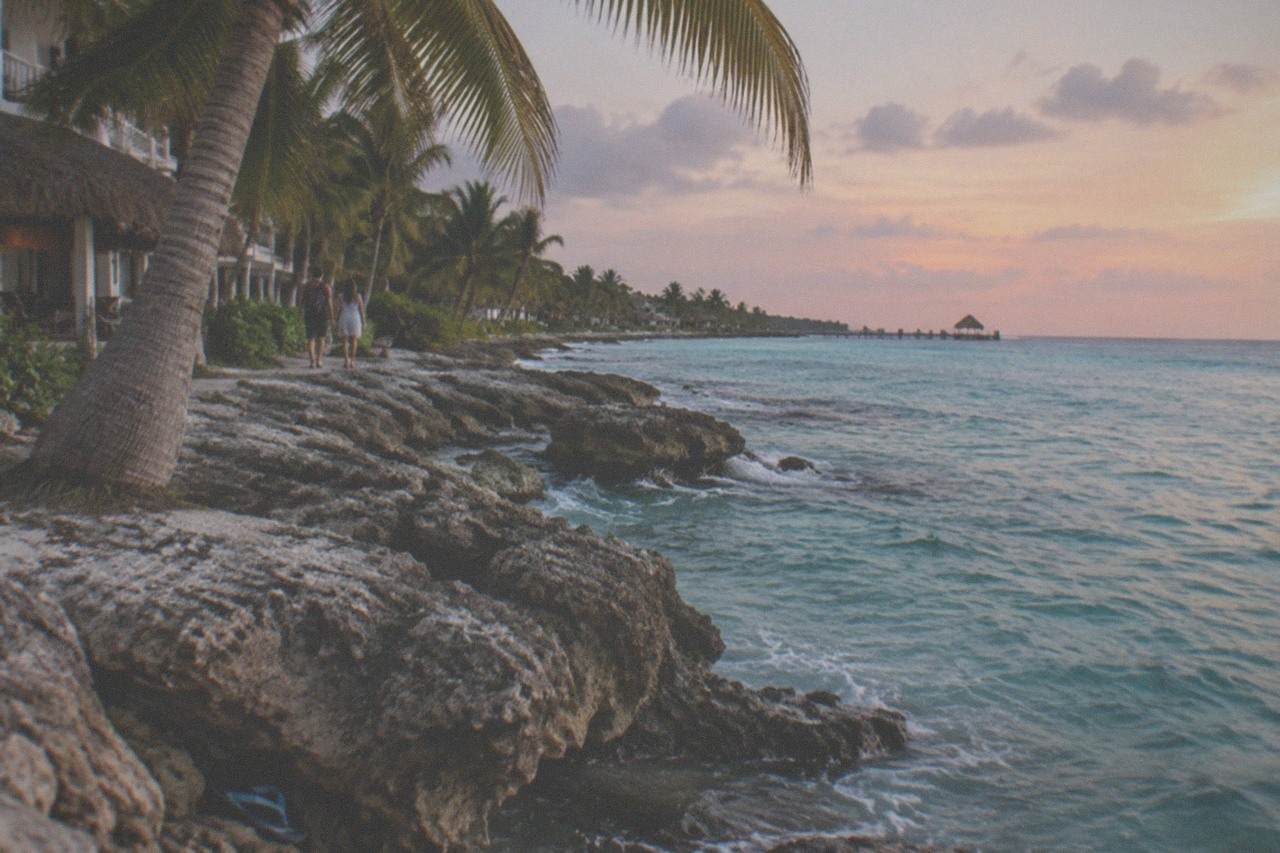
Is It Safe To Go To Cozumel Right Now In 2026?
Yes, in practical terms. Cozumel sits inside Quintana Roo's Level 2 "Exercise Increased Caution" advisory, the same level assigned to the state overall and to Mexico as a whole, and the island's own reported incidents involve mostly petty theft, fraud complaints and isolated criminal-justice cases rather than violence aimed at visitors. Millions of cruise passengers and day trippers move through San Miguel each year without incident.
That one-sentence answer usually prompts a second question: what does Level 2 actually change about a beach day? Very little on the ground. The advisory is a state-level rating, written for the whole of Quintana Roo, which includes Cancun, Playa del Carmen and Tulum alongside Cozumel. It advises travelers to stay alert after dark in downtown areas of the bigger mainland cities and to keep to well-lit pedestrian and tourist zones. Cozumel's downtown, San Miguel, is a compact cruise and fishing town where the malecon, the plaza and the shop streets are exactly those well-lit tourist zones. The advisory language maps onto the island with almost no friction.
The distinction matters because "is it safe" questions are usually really asking whether something has changed recently. In 2025 and 2026, credible local reporting on Cozumel centered on a drug-trafficking arrest involving a small number of individuals, US consulate warnings about fraud and theft targeting tourists, and ordinary small-crime police work. None of it described a pattern of violence against visitors, and none of it disrupted cruise operations, dive shops or ferry services. For a fuller accounting of the cartel story and why Cozumel draws federal attention despite its size, read our piece on why Cozumel is under cartel scrutiny.
One more framing point before the details. The State Department rates many popular travel destinations at Level 2, and the rating is not a prohibition; it is a request for ordinary urban attention. If you would take a cab rather than walk alone late at night in a strange city at home, you already have the skill set the advisory is asking for. The sections below break the question into the pieces that actually touch a day trip: the advisory text itself, the mainland-versus-island comparison, the ferry crossing, petty-crime avoidance, and water safety.
What Does The US Travel Advisory Actually Say About Cozumel?
The advisory covers all of Quintana Roo at Level 2, citing crime and the possibility of bystander harm during criminal disputes, and it names Cancun, Tulum and Playa del Carmen's downtown areas for after-dark caution. Cozumel is never singled out, and the island is widely described in the same reporting as having lower violent crime than the mainland tourist hubs, with an economy almost entirely built around diving and cruise visitors.
The text of the advisory is worth reading closely rather than through headlines. It notes that shootings between rival groups have injured and killed innocent bystanders in parts of Mexico, that US citizens have been victims of both non-violent and violent crimes, and that visitors should pay attention to surroundings after dark in downtown Cancun, Tulum and Playa del Carmen. The advisory page on the US State Department's Mexico travel advisory carries the full state-by-state breakdown, and it is the only source that matters for what the rating formally says.
What the advisory does not say is just as important. It does not name Cozumel's waters unsafe, does not warn against the ferry, and does not restrict any activity a day tripper would plan. Regional reporting that carries the same Level 2 rating has repeatedly noted that the violence that does occur in Quintana Roo is overwhelmingly targeted, connected to disputes between criminal groups, and concentrated in specific mainland neighborhoods and times of night. A visitor spending daylight hours snorkeling Palancar or eating lunch on the malecon is simply not in the places or the hours where those events happen.
There is also a scale question that headlines strip out. Quintana Roo's Level 2 rating has held steady across 2025 and into 2026, including in updates referenced through September. It did not rise, and it did not fall. When a rating is unchanged for over a year, "right now" questions stop being about a sudden change and become about baseline conditions. The baseline here is a state whose tourism economy depends on tens of millions of annual visitors and whose crime problem, while real, is largely unrelated to them.
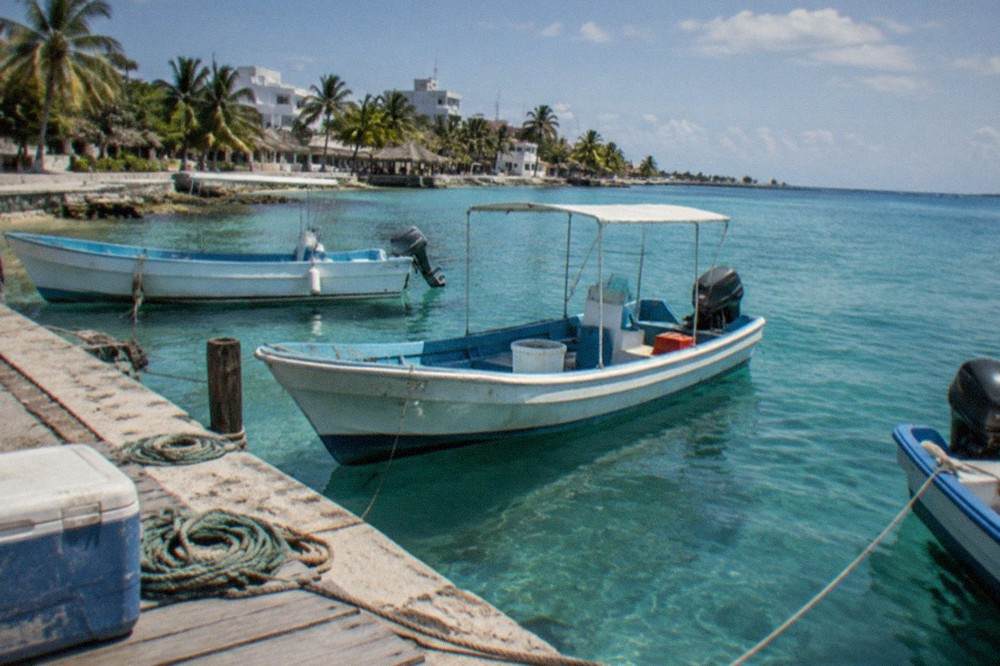
Is Cozumel Safer Than Playa Del Carmen?
Generally yes for the indicators a visitor can influence. Playa del Carmen is a larger city that has seen specific, targeted incidents in 2026, including a kidnapping case with arrests and a shooting incident on the highway toward Tulum, while Cozumel's 2025-2026 record runs toward theft, fraud and isolated arrests. The island's geography also helps: it is small, separated from the mainland by a ferry crossing, and policed around a cruise-driven economy.
That comparison needs honesty in both directions, because the mainland incidents, while real, were not random either. Local reporting in September 2026 described the arrest of four men charged in connection with a kidnapping in a Playa del Carmen neighborhood, and a shooting directed at ride-hailing drivers on the federal highway between Playa del Carmen and Tulum, an episode tied by reports to a taxi-union dispute. Both are serious, and neither involves a tourist on Fifth Avenue at noon. They sit inside the targeted-dispute pattern the advisory describes, which is why Playa del Carmen remains a functioning, heavily visited city even while those stories circulate.
Cozumel's advantage is structural rather than magical. The island hosts enormous cruise traffic at three piers, and the business ecosystem around that traffic, dive shops, restaurants, taxi fleets, beach clubs, has a strong shared interest in visible order. Reported visitor complaints in 2025 and 2026 centered on things like credit-card fraud, overcharging and locker theft rather than violence. Those are annoying and worth guarding against, and the section below covers how, but they are a different category of risk than the one that makes people ask about safety in the first place.
For travelers staying in Playa del Carmen who are weighing a Cozumel excursion against a mainland day, the practical read is this: both are reasonable, both call for the same basic urban habits, and the island removes the highway variable entirely. You can read our wider safety rundown in is Playa del Carmen safe, which goes deeper on the mainland side, and our Cozumel day trip guide for the full logistics of the crossing.
If a guided day takes the planning off your plate, the operator's live listing shows current availability and inclusions:
How Do You Get To Cozumel Safely From Playa Del Carmen?
Take the passenger ferry from the Playa del Carmen Maritime Terminal at the end of Fifth Avenue. Ultramar and Winjet catamarans run roughly every 30 to 60 minutes between about 7 AM and 10 PM, the crossing takes about 45 minutes, and one-way adult fares run roughly $12 to $22 depending on operator, class and whether you book online. It is the same crossing cruise crews, dive instructors and locals make daily.
The ferry is the single most safety-relevant decision in a Cozumel day trip, and it is a low-stress one. Two operators, Ultramar and Winjet, run passenger catamarans from the terminal at the foot of Fifth Avenue, with departures interleaved through the day and a crossing of about 35 to 45 minutes. One-way adult fares land in the roughly $12 to $22 band depending on the operator, the ticket class and whether you buy online in advance, where small discounts are common. Current schedules are consolidated on the Cozumel ferry schedule page, and the operators' own sites carry real-time times and fares. Seas are usually calm, but the crossing can be bumpy in strong winds; if you are prone to motion sickness, take a remedy before boarding rather than after.
A few practical habits make the terminal smooth. Buy your ticket from the counter or the operator's own site rather than anyone selling on the street near the terminal, keep your bag in front of you in the boarding crowd, and photograph your return-schedule options so you are not deciding at 9 PM. The terminal area around Fifth Avenue is busy and tourist-policed, which is exactly what you want. One day-trip product bundles the ferry itself: the Playa del Carmen to Cozumel Xcaret ferry with open return holds a 4.5 rating from 105 reviews and runs from $43.03, which covers the round crossing with flexibility on the return time.
Once you land, the island's pier geography does you a favor. If your boat docks at Punta Langosta, you are already adjacent to downtown San Miguel and can walk to the malecon, the plaza and the restaurant streets in minutes. The southern piers sit roughly four kilometers from the center, a 10 to 12 minute taxi ride, so agree the fare before getting in or use a rates card. Taxis on Cozumel are plentiful and unmetered; fixing the price first is standard practice, not a negotiation you can lose.
For travelers who prefer everything arranged, many snorkel and dive tours from Playa del Carmen include the crossing, pier logistics and boat transfers in one ticket, which removes both the schedule juggling and the taxi negotiation from your day.
What Are The Most Common Risks For Tourists On The Island?
Theft and fraud, in ordinary forms: items lifted from beach bags and lockers, card skimming and dishonest charges, timeshare and silver-shop sales pressure, and taxi fares not agreed in advance. Violent crime against visitors is rare enough that the US consulate's Cozumel-specific messaging has focused on fraud and theft rather than assault, and standard precautions cover nearly all of it.
The boring risks are the ones that actually happen, so it is worth naming them concretely. A locker theft at a beach club, a card that gets cloned at a marginal shop, a bracelet scam on the pier approach promising a "free" tour that ends in a presentation, a taxi that costs triple what you expected because the fare was never set. None of these are dramatic, all of them are avoidable, and each one has a one-line fix.
| Risk | Where it happens | How to avoid it |
|---|---|---|
| Bag and locker theft | Beach clubs, dive shops, ferry terminal | Use locks where offered, carry valuables in a dry bag or leave them at your hotel |
| Card fraud and skimming | Small shops, some restaurants | Pay cash for small amounts, use ATMs inside banks, check statements after the trip |
| Sales and timeshare pressure | Pier approaches, downtown walkways | Decline politely and keep walking; "free gift" offers usually have a presentation attached |
| Taxi overcharging | Southern piers, remote beach roads | Agree the fare before boarding, or ask the driver to repeat it and confirm in writing |
| Sun and dehydration | Boat decks, reef snorkeling, beach days | Biodegradable reef-safe sunscreen, hat, more water than feels necessary |
Two of those rows deserve a sentence more. Card fraud on Cozumel is the risk the US consulate has actually flagged in recent messaging about American tourists, which tells you where the real problem sits: not violence, but the quiet financial sting. Bank-lobby ATMs and cash for small purchases cut most of it. And the sunscreen row is not just comfort: most managed marine sites in Quintana Roo require or strongly push biodegradable, mineral-based sunscreen, and conventional lotions are commonly refused at entry or trigger a mandatory rinse-off. Bring the right kind and you skip both the chemical issue and the gate delay.
After-dark habits deserve a mention even though most day trippers are back on the mainland by evening. If you stay for dinner, the malecon and the streets around the plaza stay busy and well lit, and walking there in a group is unremarkable. The advisory's after-dark caution is about deserted stretches and unfamiliar neighborhoods, and Cozumel at night on the tourist streets does not resemble either. As with any port town, keep phones off table edges and drinks in sight.
Is It Safe To Snorkel And Dive In Cozumel?
Yes, and it is the island's core activity, run by a large, mature fleet of licensed operators on some of the healthiest reefs in the Mexican Caribbean. Palancar and Colombia reefs anchor the southwest coast, with conditions suitable from first-time snorkelers through certified divers. The risks that matter are marine-condition risks, current, boats and sun, and they are managed with guides, vests and reef-safe rules, the same ones enforced at sites across Quintana Roo.
Cozumel's reputation was built underwater. The island sits at the southern end of the Mesoamerican reef system, and its southwest-facing coast, sheltered from open Atlantic weather, holds the flagship sites. Palancar Reef is known for massive coral formations, swim-throughs and dense marine life including turtles, rays and reef sharks, with the shallower Gardens sections suiting newer snorkelers. Colombia Reef, a short boat run further south, pairs dramatic walls and pinnacles with strong turtle sightings in its shallows. This coast's sheltered position is also why sargassum, which has made 2026 a heavy year on east-facing mainland beaches, is far less of a factor here: the west side of Cozumel sits behind the island from the prevailing weed arrivals, and operators route to clear water.
Water safety on these trips is procedural rather than heroic. Boats brief before anyone enters the water, snorkelers wear vests, groups stay with a guide, and dive operators hold certifications to Mexican standards with most following PADI or SSI frameworks. Currents along the wall sites are real, which is why drift snorkeling and drift diving here are guided activities rather than freelance ones. If you book, check that your operator lists guide ratios, vest provision and a licensed boat; every established shop on the island does.
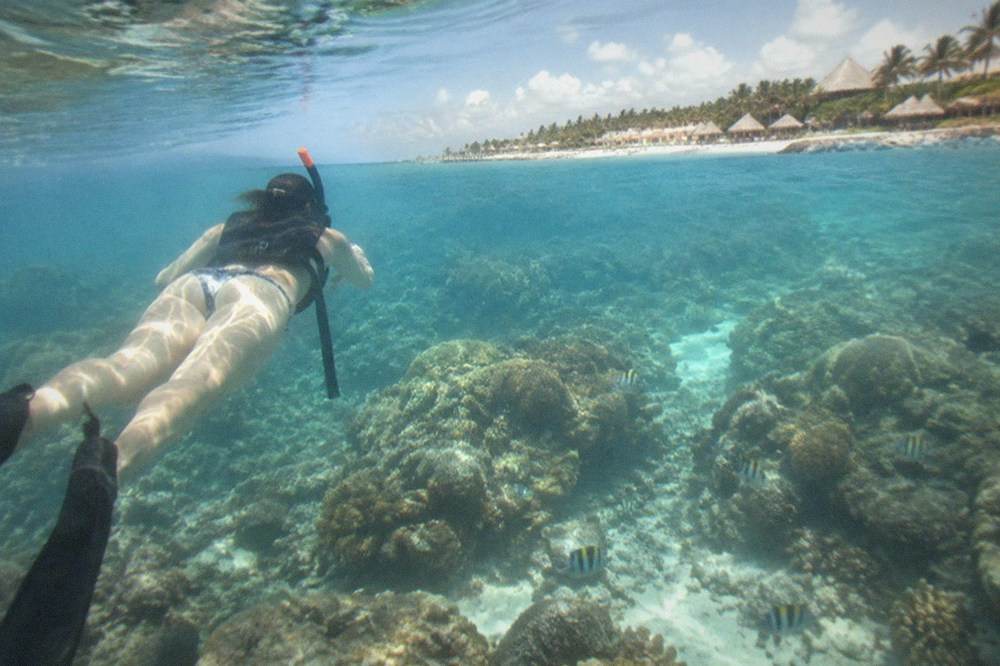
For day trippers from Playa del Carmen, a guided option bundles the whole chain. The Cozumel Snorkeling Tour from Playa del Carmen runs from $135 per person, holds a 4.0 rating from 33 reviews on the live listing, a modest review pool worth stating plainly, and pairs reef snorkeling with lunch. Those numbers describe a newer listing rather than a weak product; the pattern of small pools with solid scores is common on fresh inventory. Read the listing's recent reviews for the current guest experience before booking.
If you would rather stay closer to the mainland, an Isla Mujeres catamaran cruise with beach club, snorkel, lunch and open bar holds a 4.0 rating from 2,618 reviews and runs from $59, one of the largest review records on our entire roster. It is a different island with a different vibe, more party-catamaran than reef expedition, which is why both options exist.
Divers with certifications should book directly with a Cozumel shop for a two-tank trip; the island's dive infrastructure is among the best in the hemisphere, and most shops run small groups to Palancar, Colombia and the northern sites. For everyone else, guided snorkeling is the entry point, and the southwest reefs are exactly what the brochures promise.
When Is The Best Time To Visit Cozumel?
November through April, which is the regional dry season, with calmer seas, lower sargassum and cooler, drier air. Hurricane season runs officially from June 1 to November 30 with peak activity August through October, and 2026 has been a heavy sargassum year that peaked in summer and has been easing since. Cozumel's west-facing coast is one of the more sargassum-protected positions in Quintana Roo, which matters more than the month on the calendar.
The seasonality picture has three layers. The first is rainfall: the Yucatan Caribbean coast runs a dry season roughly November to April and a rainy season roughly May to October, with rainy-season afternoons often short and intense rather than all-day. The second is tropical weather: the official Atlantic hurricane season, per the NOAA hurricane climatology reference, runs June 1 through November 30, with peak formation odds in August through October. Storms rarely hit Cozumel directly, but a distant system can churn seas enough to cancel boat trips, which is why reputable operators offer easy rescheduling or refunds when marine conditions close the reefs.
The third layer is sargassum, and 2026 has been a near-record year. Satellite monitoring showed record Caribbean abundance in early summer, with Quintana Roo collecting more seaweed than in any prior year and Playa del Carmen the most affected municipality. By late September the trend had turned sharply downward, with collection volumes a fraction of August's and the state monitoring network reporting arrivals easing through autumn. The practical takeaways for Cozumel: the island's west coast is comparatively sheltered, offshore reef sites are reached past the nearshore line where weed gathers, and conditions improve month over month into the clean November-April window.
Crowds follow the cruise calendar more than the weather calendar. Days with multiple ships in port make San Miguel's shop streets busy and taxi lines long, while the reefs, reached by boat and spread across many sites, absorb numbers better. If your day trip is flexible, midweek sailings tend to run lighter than weekend ones, and morning ferry departures buy you the calmest sea state and the most daylight on the water.
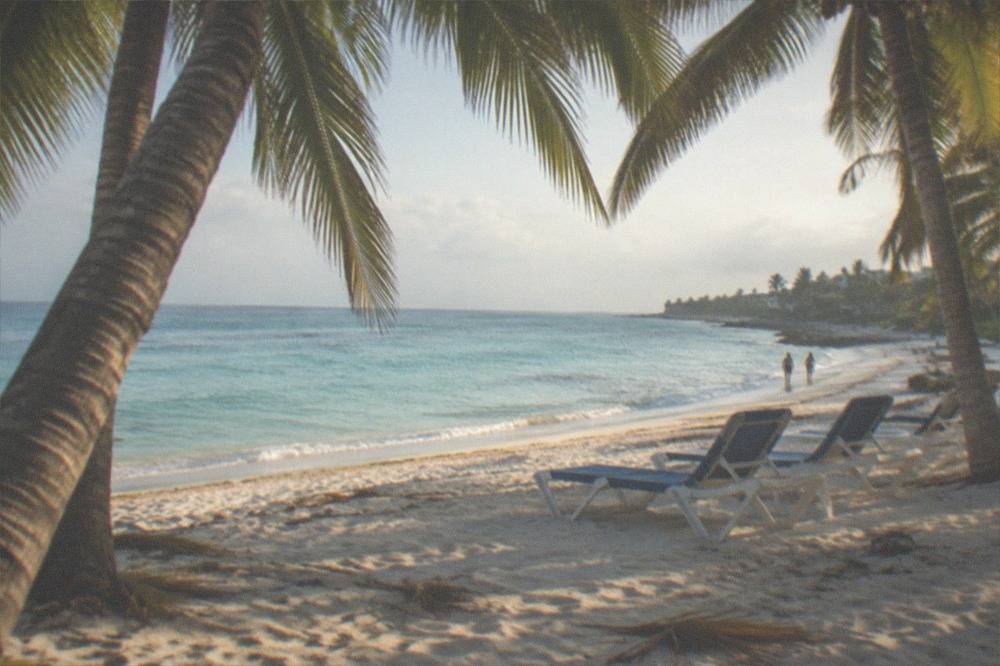
Should You Book A Tour Or Explore Cozumel On Your Own?
Independent exploring suits confident travelers who want to walk San Miguel, rent a scooter or taxi to a beach club, and pay site fees as they go. A booked tour suits anyone who wants the ferry, pier logistics, reef transport, gear and lunch solved in one ticket, and it is the safer choice for water activities specifically, since guided snorkeling comes with vests, briefing and a boat crew watching conditions all day.
The honest trade-off is control versus friction. Doing Cozumel solo means you choose every hour: a long lunch on the malecon, a taxi south to a quieter stretch of sand, a shop you actually want to browse. It also means you own the schedule, the fare negotiations and the decisions about which beach club is worth the entry. None of that is hard, and the island is small enough that mistakes cost an hour, not a day.
A booked tour removes the decision load. The strongest case for one is the water. Reef sites sit offshore and are reached by licensed boats; you cannot walk to Palancar. A tour that includes the crossing, the boat, the guide and the gear turns the island's best feature into a single line item, and the operator's crew handles weather calls and marine rules. For families, new snorkelers and anyone on a tight one-day window, that reliability is worth a premium. Our Playa del Carmen snorkeling guide covers the mainland reef options if you would rather skip the crossing entirely.
On this site we track verified listings for the main options, and Tours in Playa del Carmen keeps the safety-relevant details, ferry logistics, advisory context and current conditions, gathered in one place so the comparison above does not require five open tabs. Whatever you choose, book through the operator's live listing rather than street sellers, and keep the receipt on your phone for the return.
Common Questions About Cozumel Safety
Is It Safe To Go To Cozumel Right Now In 2026?
Yes, for ordinary tourist activity. Cozumel falls under Quintana Roo's Level 2 advisory, which asks for increased caution rather than avoiding travel, and the island's own incident record involves petty theft and fraud far more than violence against visitors. Standard precautions, cash for small purchases, agreed taxi fares and alert habits after dark, cover the realistic risks.
Is Cozumel safer than Cancun and Playa del Carmen?
All three share the same state-level Level 2 rating. Cozumel's reported visitor issues skew toward theft, fraud and overcharging rather than violence, and its small, cruise-driven economy keeps the tourist core busy and policed. The mainland cities carry larger populations and more of the targeted-dispute incidents described in recent reporting, though those rarely touch tourist zones in daylight.
Is the ferry from Playa del Carmen to Cozumel safe?
Yes. Ultramar and Winjet catamarans make the roughly 45-minute crossing many times daily, roughly every 30 to 60 minutes from about 7 AM to 10 PM, and it is the same service divers and locals use constantly. Buy tickets at the terminal or operator site, watch your bag in boarding crowds, and take motion-sickness remedies before departure if winds are up.
What should you be careful of in Cozumel?
Theft from bags and lockers, card skimming, sales and timeshare pressure near the piers, and unagreed taxi fares. Use bank-lobby ATMs, carry cash for small amounts, decline "free gift" offers politely, and set taxi fares before boarding. Biodegradable sunscreen is required or strongly enforced at most managed marine sites, so bring a mineral-based one.
Is it safe to snorkel in Cozumel?
Yes, with a guide and a licensed boat. The southwest reefs, Palancar, Colombia and their neighbors, are the island's core product, operated by a mature dive and snorkel fleet. Vests, briefings and guide ratios are standard, and the west-facing coast is comparatively sheltered from the sargassum that affects east-facing mainland beaches.
When is the safest and best season to visit Cozumel?
November through April, the dry season, offers calmer seas, drier air and the cleanest water. Hurricane season runs June 1 to November 30 with an August-October peak, and boat trips can be rescheduled when seas are rough. Sargassum, heavy in 2026, peaked in summer and has been easing through autumn, and Cozumel's west coast is among the more protected shorelines in the state.
Ready to put the safety question behind you? The three most-booked Cozumel and island options from Playa del Carmen are below, with live availability on each operator's listing.