Why Can't You Go Inside Chichen Itza Anymore?
Chichen Itza banned climbing El Castillo in 2006 and now enforces a 15-meter viewing distance. Here is what closed, why, and what you can still see on a visit from Playa del Carmen.
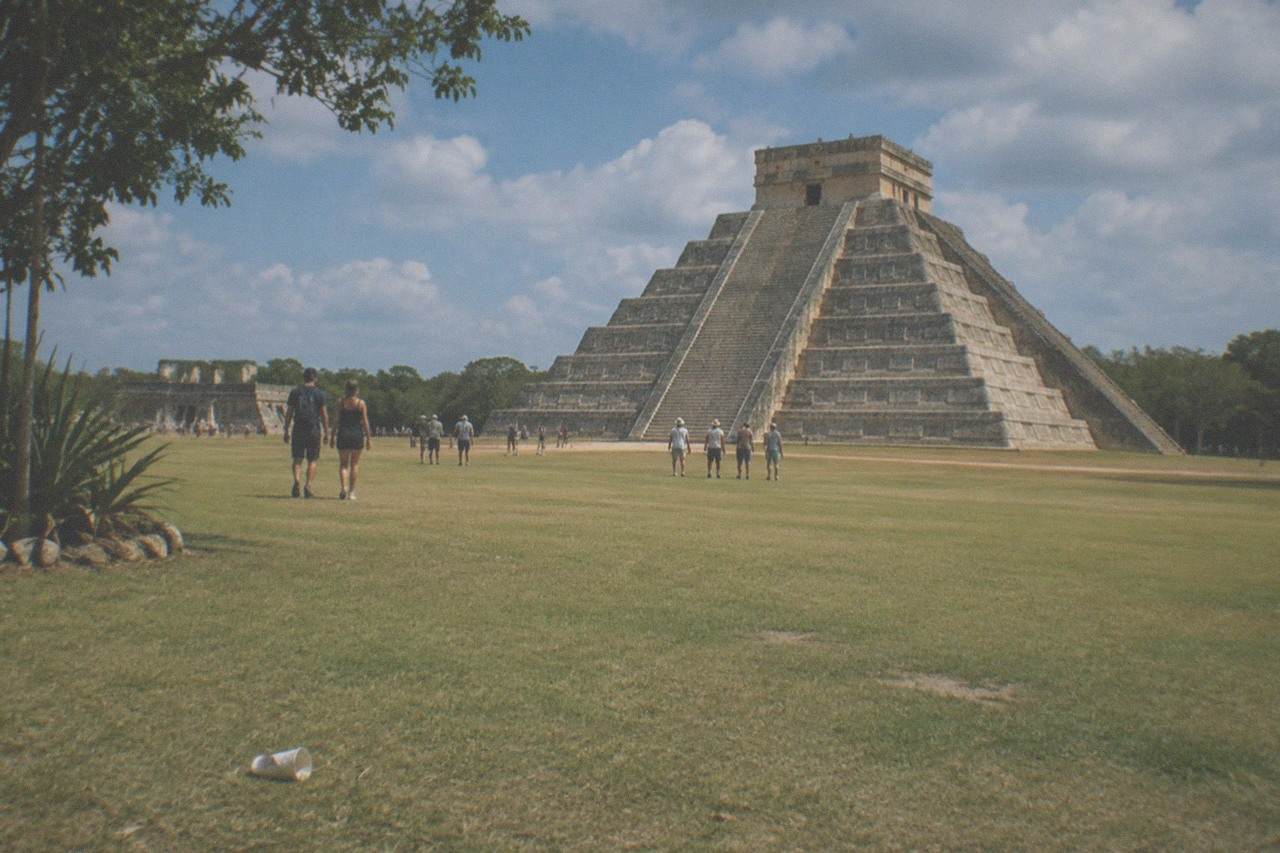
Why Can't You Go Inside Chichen Itza Anymore?
You can still walk the whole site, but you cannot climb El Castillo or enter its interior: climbing has been banned since 2006, barriers and a roughly 15-meter viewing distance are now enforced, and the famous Red Jaguar throne inside is permanently off-limits. The rule protects a fragile limestone structure that was never built for millions of feet.
The question comes up constantly in Playa del Carmen tour offices, and the honest answer is that nothing dramatic happened overnight. What ended was a decades-long experiment in letting people do whatever they pleased with a 1,000-year-old limestone pyramid. El Castillo, also called the Temple of Kukulkan, is the most famous building at Chichen Itza and one of the most visited archaeological sites in the Americas. For years visitors could climb its 91 steep steps and look out over the ruins the way the Maya priesthood once did.
That ended in stages. A fatal fall in 2006 pushed Mexico's National Institute of Anthropology and History, INAH, to prohibit climbing on El Castillo outright. By 2008 the ban covered other structures across the site and was being fully enforced. The interior chamber, where a red-painted jade-eyed jaguar throne sits at the end of a narrow stairway, has been closed to the public far longer and will not reopen. More recently, in April 2025, INAH added a roughly 15-meter minimum viewing distance around the pyramid, with barriers and active patrols, to slow erosion of the base and stairways.
None of this makes the site a drive-by photo stop. Chichen Itza is a large, walkable archaeological zone with a great ball court, the Temple of the Warriors and its forest of columns, the skull platform, the sacred cenote and long sacbe causeways connecting it all. The restriction is specifically on climbing and entering structures. Visitors still spend two to three hours on site, and most tours from Playa del Carmen budget exactly that.
The practical takeaway for anyone booking from the coast: what you are buying is a guided walk through one of the New7Wonders of the World, not a climbing experience. If a seller anywhere promises you access inside the pyramid, that promise is false. The tours that actually deliver value here are the ones that get you through the gate at 8 AM before the bus convoys arrive, which is exactly the angle worth shopping for.
When Did Chichen Itza Stop Allowing Climbing?
Climbing El Castillo was prohibited in 2006 after a fatal accident and mounting preservation concerns, and the ban was extended to other structures and fully enforced by 2008. A roughly 15-meter minimum viewing distance, introduced around April 2025 for erosion protection, added a second ring of protection, with barriers and patrols around the pyramid base.
The 2006 death was the visible trigger, but the pressure behind the ban had been building for a generation. Chichen Itza was already receiving well over a million visitors a year, and the vast majority of them wanted the same thing: to stand on top of El Castillo. The staircase is steep, narrow and made of soft limestone worn smooth by traffic, a combination that produces both falls and damage. An 80-year-old woman died after a fall in January 2006, and within days the site announced that climbing was finished.
Enforcement then widened. Other temples and platforms across the zone, some in worse structural condition than El Castillo, were roped off in the following two years. By 2008 a visitor could no longer legally ascend anything at Chichen Itza. The interior of El Castillo, reached through a narrow corridor and stairway that leads to the Red Jaguar throne, had been closed to the general public since the 1990s for structural and conservation reasons, so the interior question was effectively settled long before the climbing ban.
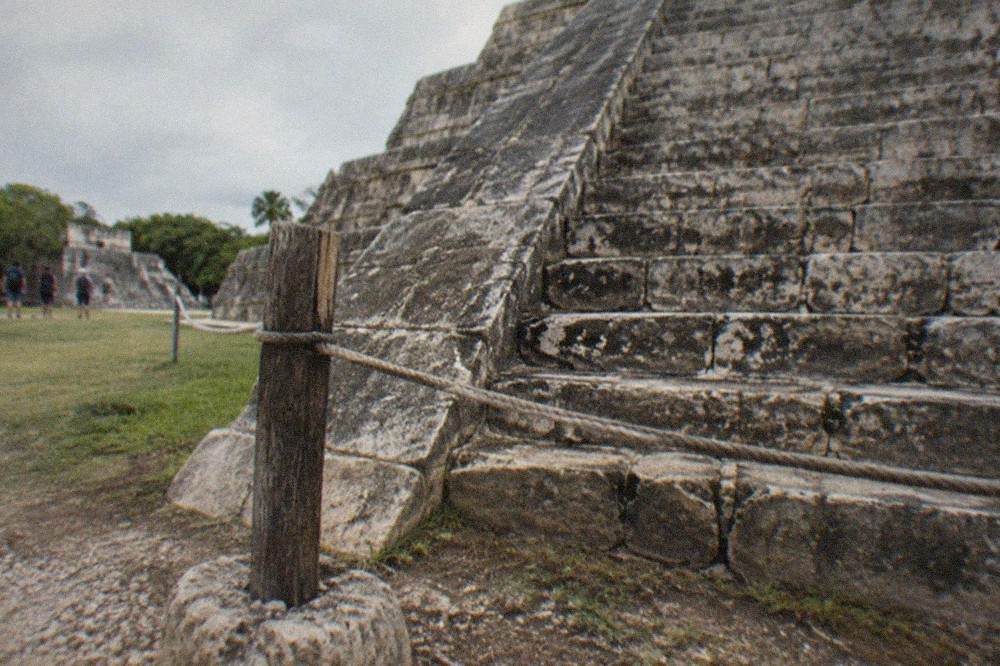
The 2025 change is the one most recent visitors notice. The roughly 15-meter viewing distance means you now circle El Castillo from a perimeter rather than walking up to its base, and the barriers are patrolled. INAH framed the measure as erosion protection: the lower courses of the pyramid and the surrounding plaza pavement were taking concentrated foot traffic, graffiti and hand contact at a rate the stone cannot absorb.
The pattern to understand is that each rule has stayed. There is no scheduled reopening of the staircase, no seasonal exception, and no tour operator with special climbing access. Reports of visitors crossing barriers during equinox surges have led to reinforced enforcement, not relaxed rules. If anything, the direction of travel is more restriction, not less.
If you are choosing how to spend the day from Playa del Carmen, the small-group early access format handles the new reality best: you arrive at opening, walk the perimeter while the light is still low and the crowds thin, and move on to a cenote by early afternoon.
What Can You Still See Up Close At Chichen Itza?
You can walk right up to most platforms, colonnades and the Great Ball Court, and you can circle El Castillo to within about 15 meters. What you cannot do is ascend any staircase or enter any interior. Visitors follow roped paths around a compact site, and temple interiors such as the Temple of the Warriors and the Temple of Kukulkan stay closed.
The site is not a single pyramid with everything fenced off. It is a zone of several square kilometers with clusters of buildings, and the roping is selective. The Great Ball Court, the largest in Mesoamerica, is fully walkable, and its carved stone rings and reliefs are viewable at close range. The Temple of the Warriors and the Group of a Thousand Columns sit behind low barriers you can approach and photograph. The sacred cenote, the skull platform and the Venus platform are all on the walking circuit.
| Area of the site | How close you can get | What is off-limits |
|---|---|---|
| El Castillo (Kukulkan pyramid) | Perimeter at roughly 15 meters, barriers and patrols | Climbing, touching, interior stairway and throne |
| Great Ball Court | Walk through the court, view rings and reliefs | Climbing the walls or platforms |
| Temple of the Warriors | Approach to the base and column group | Ascending the upper temple |
| Sacred cenote | Viewed from the cliff edge platform | Swimming, no exceptions |
| Nunnery and Observatory complexes | Walkable paths through the complexes | Entering enclosed rooms |
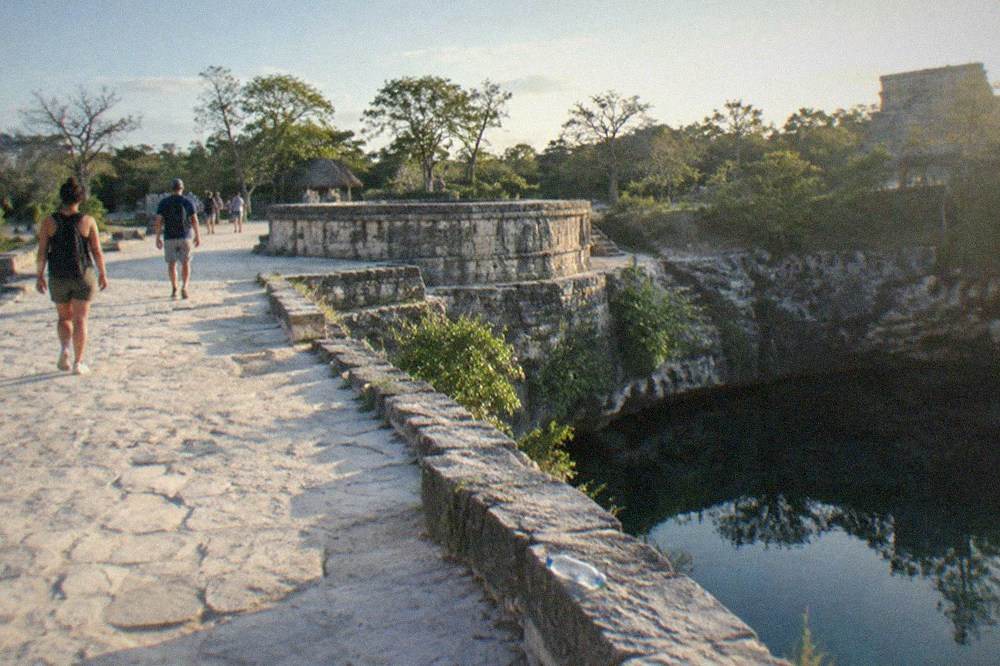
The sacred cenote deserves its own note because it is the one rule people ask about second. The large sinkhole at the end of a raised causeway was a ceremonial offering site where the Maya deposited gold, jade and human remains. It is a viewing platform only, and swimming in it has been prohibited for decades. The cenotes you swim in on Chichen Itza tours, like Ik Kil or the ones near Valladolid, are separate commercial cenotes, not the archaeological one.
Guided tours earn their price at this stage. Without a guide, El Castillo at 15 meters reads as a beautiful pyramid and not much more. With one, the serpent shadow phenomenon on the north staircase, the acoustic properties of the ball court, the alignment of the temple calendar and the story of the Puuc and Toltec influences all come alive. That is the modern experience of the site, and it is a genuinely good one.
Why Are The Rules So Strict Now?
The pyramid is limestone, and limestone erodes: millions of footsteps, hand oils and graffiti wore down staircases and carvings long before anyone measured the damage systematically. After a visitor died falling from El Castillo in 2006, INAH moved from discouraging climbs to banning them, then kept tightening enforcement as visitor pressure grew.
Chichen Itza was built between roughly the 9th and 12th centuries, and its builders used the material the region offered: soft limestone, cut and finished by hand. That stone survives the Yucatan climate remarkably well in structural terms, but its surfaces are soft. Every staircase tread, every carved serpent head, every molded facade is slowly consumed by rain chemistry, tropical vegetation and, in the modern era, by contact. A site that receives visitors at Chichen Itza's scale multiplies the contact term enormously.
Then there is the safety mathematics. The El Castillo staircase rises about 24 meters at an angle steep enough that descending visitors traditionally held a chain. Add heat, humidity and crowds, and falls were a regular occurrence. A single well-documented fatal fall in 2006 turned a debate into a decision, and the decision has never been revisited.
The same logic now drives the 15-meter perimeter and the reinforced enforcement during the March and September equinox weeks, when the serpent-shadow phenomenon draws peak crowds and barrier breaches have been reported. INAH's position, restated in local coverage each time an incident makes news, is that violations can mean removal from the site, fines or legal action. Guides repeat the rules at the gate because their permits depend on compliance too.
There is a fair criticism worth acknowledging: some visitors feel the site has become a museum behind ropes, and the drop in visitor numbers suggests the pricing and the restrictions together have cooled demand. But the counterfactual is a pyramid with an open staircase, and that option no longer exists anywhere in serious Mexican archaeology. This site, the anchor of Tours in Playa del Carmen itineraries heading inland, is managed for the long term, and the management is not negotiable at the ticket window.
What Happened During The 2026 Closure?
The site closed temporarily from mid-May until June 1, 2026, during disputes among vendors, artisans, guides and authorities over a new visitor center, and it reopened with access routed through the CATVI facility. Nothing about the climbing ban changed in the process. If anything, the reopening tightened the visitor flow around the pyramid.
The closure had nothing to do with access rules and everything to do with the commercial and administrative tangle that surrounds Mexico's busiest archaeological sites. Disputes over the new visitor center, the CATVI, and over vendor and guide rights at the entrances led authorities to shut the gates for roughly two weeks from mid-May. When the site reopened on June 1, 2026, ticketing and access were routed through the new facility, which changed where you enter and how you queue but not what you may touch.
For travelers the practical consequences were modest but real. Tours that had quoted entrance-inclusive pricing had to confirm the new ticketing flow worked, and a handful of departures in late May were rebooked. The serpent shadow dates, around March 20 and September 22 each year, were unaffected, and the autumn equinox version draws significantly smaller crowds than the spring one because it falls in the rainy season.
The dip in visitors is worth thinking about if you dislike crowds. A 13.4 percent year-over-year drop, alongside the permanent early-morning advantage, means a well-timed weekday visit in shoulder season is now noticeably calmer than the same visit two years ago. Arriving at opening on a Tuesday or Wednesday remains the single best lever you control. If you want the fuller story of what shut and what did not, the site's own coverage at is Chichen Itza closed tracks the reopening in detail.
How Much Does It Cost To Get In?
Foreign adult visitors pay a combined total of roughly 676-697 MXN, split between an INAH federal fee of about 105 MXN and a Yucatan state fee of roughly 571-592 MXN. Mexican nationals pay roughly 272-310 MXN with ID. Children under 13 are often free, and Mexican citizens and residents enter free on Sundays.
The two-window structure confuses people every single day, so it is worth spelling out. You pay the INAH federal portion at one window and the Yucatan state CULTUR portion at another, and the combined total is what a foreign visitor actually spends. The figures took their current form on January 1, 2026, when the annual adjustment landed, and local press has the breakdowns, per Por Esto's fee reporting. Fees are reviewed annually, so treat the range as a range.
| Visitor category | Combined entry cost | Notes |
|---|---|---|
| Foreign adult | roughly 676-697 MXN | INAH portion plus Yucatan state fee, paid at separate windows |
| Mexican national | roughly 272-310 MXN | Valid ID required |
| Yucatan resident | roughly 105 MXN in some reports | INAH portion only in several accounts |
| Children under 13 | Often free | Reduced rate at some windows |
| Sundays | Free for Mexican nationals and residents | Valid ID required, which is why Sundays are crowded |
Cash in pesos remains the most reliable payment method, though cards are accepted at the windows. Two traps catch visitors. First, tour listings vary in whether the entry fee is bundled into the price or paid separately at the gate, so check the inclusions line before you assume. Second, the Sunday free-entry day for Mexican nationals means Sunday is consistently the site's most crowded day, which matters when your plan depends on quiet corners.
The early-access format from Playa del Carmen is the budget anchor of the category: the expert-guide option runs 4.4 from 98 reviews, from $77, which is the lowest entry price among the site's Chichen Itza options.
Which Tours From Playa Del Carmen Handle This Best?
A good tour gets you to the gate at opening, before the tour buses arrive around 10 AM, and pairs the ruins with a cenote swim so the day is not just heat and stone. Small-group early access options do this best. The drive from Playa del Carmen is roughly two to two and a half hours each way, so plan for a full day of 10 to 11 hours.
The distance frames everything. Chichen Itza sits roughly 182 km from Playa del Carmen via the toll roads, about two to two and a half hours each way in good conditions. That means the day is long, the site hours are 8 AM to 5 PM with last entry at 4 PM, and the difference between a 7 AM hotel pickup and a 9 AM one is the difference between a calm pyramid and a parking lot of buses. Early access is not a marketing phrase here; it is the whole product.
The strongest review record in the site's Chichen Itza lineup belongs to the small-group early access tour that combines Chichen Itza, Cenote Ik Kil and the Coba ruins: 4.5 from 987 reviews, from $165, the deepest review pool among this site's Chichen Itza options. Its strength is the pacing, with the pyramid in the cool morning hours, a swim at Ik Kil's open cenote around midday, and Coba, where the climbing conversation is different because Coba's main pyramid viewing follows its own INAH rules, in the afternoon. Coba's foreign entry fee is 210 MXN, per the official INAH listing.
| Tour from Playa del Carmen | Rating and reviews | From price | Format |
|---|---|---|---|
| Chichen Itza, Cenote Ik Kil, Coba Ruins small group early access | 4.5 from 987 reviews | from $165 | Small group, early access |
| Chichen Itza, Valladolid, cenote and buffet | 4.5 from 954 reviews | from $93 | Shared group, lunch included |
| Chichen Itza Deluxe | 4.7 from 251 reviews | from $115 | Small group, upgraded transport |
| Chichen Itza early tour with expert guide | 4.4 from 98 reviews | from $77 | Shared group, early entry |
The Valladolid-and-buffet combination at from $93 is the value pick for travelers who want a colonial town stop and a hot meal in the middle of a long day. The Deluxe option at from $115, 4.7 from 251 reviews, buys smaller groups and better transport. If the full comparison of operators, formats and prices is what you need before committing, the site's main Chichen Itza tours from Playa del Carmen guide carries it, and the Chichen Itza and Coba small group tour page has the itinerary details, with Check availability beside it.
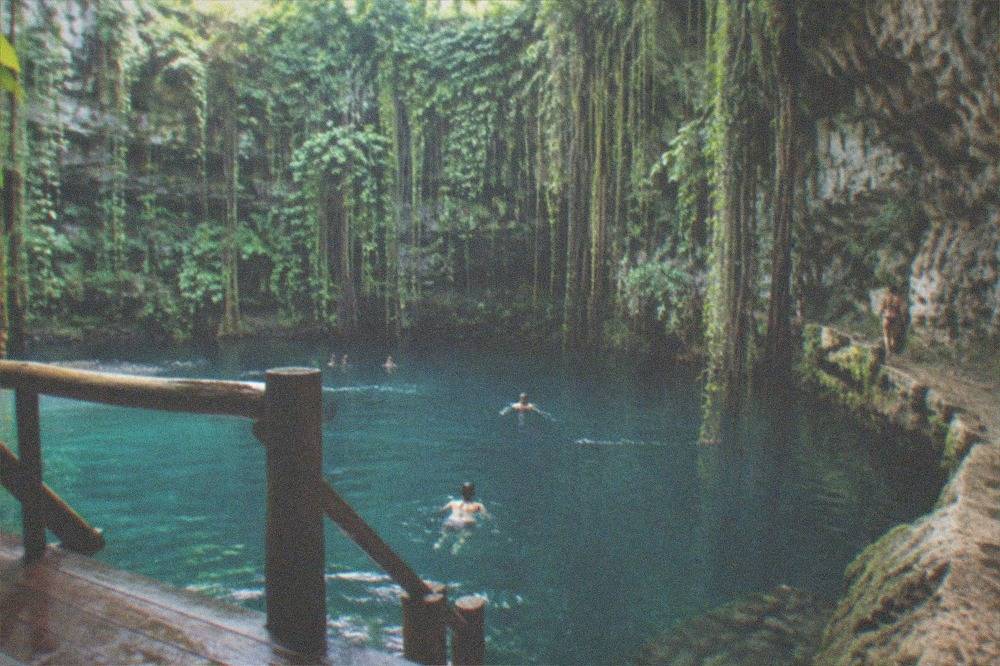
Whichever format you choose, the rules of the site travel with you. Bring biodegradable sunscreen or none, carry more water than feels reasonable, and wear shoes that survive both limestone paths and a cenote ladder. The best Chichen Itza days end not on a pyramid top but floating in cool fresh water an hour down the road, which is exactly the itinerary the strongest tours in this category have converged on.
The one thing no tour can sell you anymore is the staircase. Everything else, the ball court, the columns, the cenotes, the colonial streets of Valladolid, is still very much on the table, and at 13 percent lower crowds than a year ago, the timing has arguably never been better to see it properly. Book the early departure, respect the barriers, and let the guides do what the staircase no longer can: put you inside the world that built it.
Common Questions About Chichen Itza Access
Why Can't You Go Inside Chichen Itza Anymore?
Climbing El Castillo was banned in 2006 after a fatal fall, extended to all structures by 2008, and reinforced with a 15-meter viewing distance in 2025. The interior chambers, including the Red Jaguar throne, have been closed far longer for conservation. The rules protect soft limestone from millions of visitors and are enforced with patrols, removal and fines.
Can you climb El Castillo at all, even a few steps?
No. The staircase is fully off-limits, the barriers are patrolled, and violations can mean removal from the site, fines or legal action. No operator has special climbing access, and equinox surges have led to reinforced enforcement rather than exceptions.
Is Chichen Itza still worth visiting without climbing?
Yes, and most visitors think so. The Great Ball Court, the Temple of the Warriors, the sacred cenote and the surrounding complexes are all walkable, and a good guide turns the pyramid's calendar alignments and serpent shadow into the highlight of the visit. Reviews across the site's tour lineup, 4.5 from 987 reviews on the strongest option, reflect that experience.
When is the best time of day to visit?
Arrive at opening, 8 AM, on a weekday. Tour buses from the coast concentrate between mid-morning and mid-afternoon, and last entry is 4 PM with the site closing at 5 PM. Tuesday and Wednesday are typically the quietest weekdays, and Sundays draw large local crowds because Mexican nationals and residents enter free with ID.
Do tours from Playa del Carmen include the entrance fee?
It varies by listing. Some bundle entry, others collect it separately at the gate, so check the inclusions line before booking. Foreign visitors pay a combined total of roughly 676-697 MXN at two separate windows, the INAH federal portion and the Yucatan state portion.
What is the fine for climbing the pyramid?
Authorities state that violations can result in removal from the site, fines or legal action, and no specific fine schedule is published in the sources this site verifies. The practical rule is simpler: the barriers are patrolled, and crossing one risks your entire day, not just a fee.