Is It Safe To Leave Your Resort In Riviera Maya?
The honest answer for resort guests weighing their first trip off the property: the official advisory, transport realities, the situations that still deserve caution, and why guided tours close most of the remaining gaps.
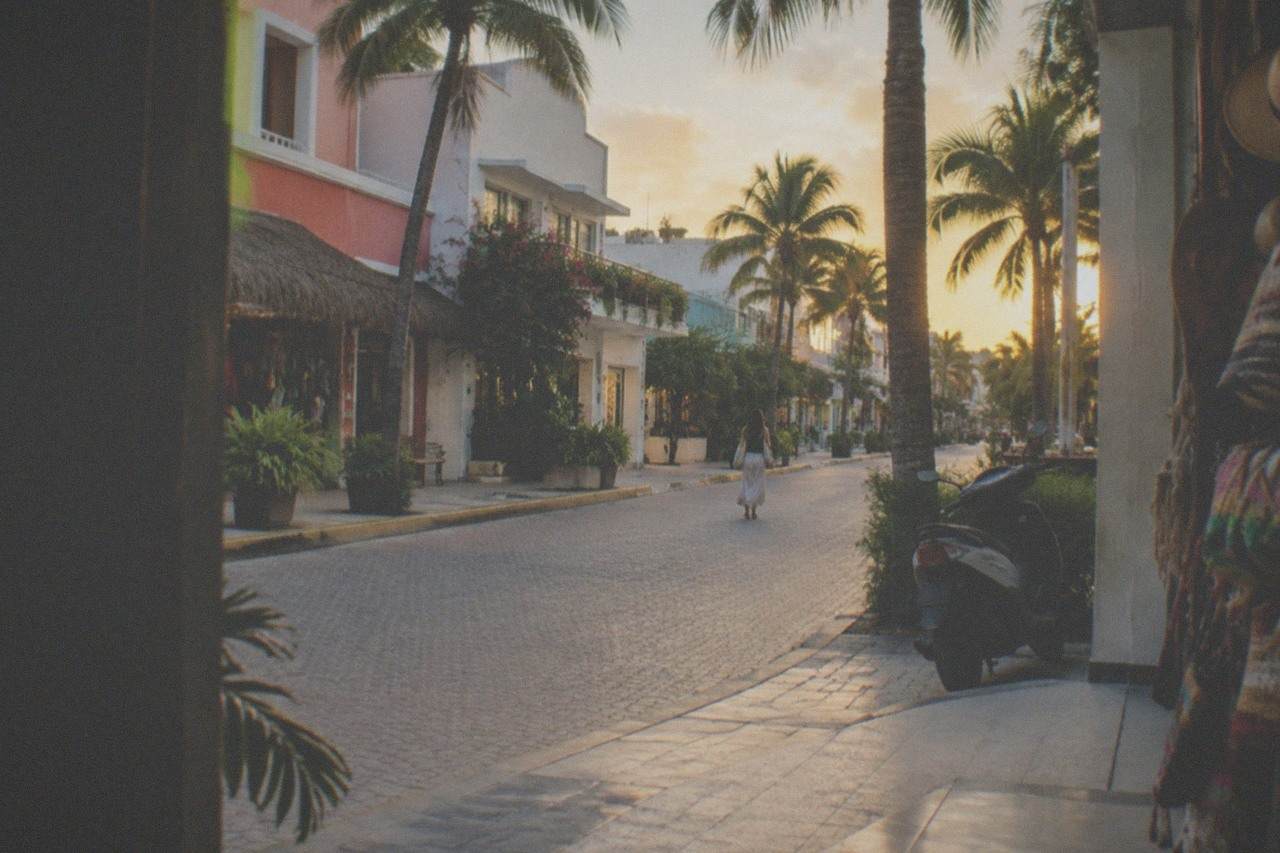
Quintana Roo, the state that holds Cancun, Playa del Carmen, Tulum and Cozumel, sits at Level 2, Exercise Increased Caution, on the U.S. State Department's Mexico advisory. That is the same level carried by the country as a whole, and it is the level most visitors read past on their way to the beach. The question worth asking is narrower: once you are inside a gated resort, is the other side of the lobby actually a risk?
Is It Safe To Leave Your Resort In Riviera Maya?
Yes, it is generally safe to leave your resort in Riviera Maya. The overwhelming majority of guests experience no problems when exploring the area in normal conditions, provided they take the same ordinary precautions they would in any tourist city, and the official crime statistics support this rather than suggesting visitors should stay behind resort gates. The advisory for Quintana Roo is Level 2, Exercise Increased Caution, not a stay-away warning, the same level the State Department assigns to the country overall and to many heavily visited destinations worldwide. The incidents that reach the news are overwhelmingly local disputes rather than attacks on visitors, and daylight outings, licensed transport and a guided tour for anything remote keep the practical risk low. Nothing in the official guidance tells you to remain on resort property.
The Riviera Maya as a destination exists because of people who leave resorts. The whole coast between Cancun and Tulum is a chain of cenotes, ruins, reefs and beach towns sustained by day-trippers, and every operator along it, including Tours in Playa del Carmen, is built on guests walking out of a gated lobby and boarding a van. If leaving the property were genuinely dangerous, the region's economy would have collapsed decades ago.
What the advisory actually asks for is specific and modest. Pay attention to your surroundings after dark in the downtown areas of Cancun, Tulum and Playa del Carmen. Stay on well-lit pedestrian streets and in tourist zones rather than wandering isolated areas at night. That is the same advice a visitor to most large cities gets, and it describes the evening on Fifth Avenue in Playa del Carmen, a pedestrian street lined with shops and restaurants, about as well as it describes anywhere.
The honest framing is this: the biggest gap between staying on-resort and heading out is not violence, it is logistics and information. Which road, which van, which entrance fee, which operator is real. A guest who solves those questions, usually by booking a vetted tour or following a well-trodden route, has closed most of the distance between the two versions of the trip.
What Does The Official Travel Advisory Actually Say?
The official advisory places Quintana Roo at Level 2, Exercise Increased Caution, but its actual wording is narrower than the headline suggests. It specifically flags risks of violence from criminal organizations, particularly in areas outside tourist zones, and notes that bystanders have occasionally been caught up in disputes between rival groups, while stopping short of warning travelers away from the state altogether. Its practical instructions are to pay attention after dark in downtown areas and remain in well-lit pedestrian and tourist zones. Nothing in it tells you to stay on resort property, and nothing in it distinguishes a tour van from any other vehicle on the road.
The full text lives on the current Mexico travel advisory, and it is worth reading past the level label. Level 2 is a crowded category. It is the rating the State Department uses for large parts of the world that receive millions of visitors without anyone describing them as dangerous. The advisory also distinguishes Quintana Roo from the handful of Mexican states rated higher, and credible local reporting through 2025 and 2026 shows the region's serious incidents clustering around specific local disputes, targeted criminal activity and neighborhoods well away from the hotel zone, not around tour routes, ferry terminals or archaeological sites.
For a fuller treatment of the town most resort guests visit first, read our full safety guide to Playa del Carmen, which covers neighborhood-by-neighborhood detail, the advisory history and what local reporting does and does not support. The short version there matches the short version here: tourist zones are the monitored, patrolled, economically essential part of the region, and they behave like it.
Is It Safe To Use Taxis, Buses And Colectivos Off The Resort?
Yes, taxis, buses, and colectivos are generally safe to use off the resort, and the shared transportation system is genuinely good, which is the strongest practical argument for leaving the property. Common-sense precautions like confirming fares in advance and keeping valuables secure will serve you well, but the system itself is reliable, affordable, and widely used by locals and visitors alike. ADO buses are air-conditioned, run multiple times an hour on the main routes and cost 100-160 MXN between Playa del Carmen and Tulum. Colectivos, the shared vans locals use daily, run 50-80 MXN, about $3-4, on the same corridor and leave when full. The two rules that matter: agree any taxi fare before the doors close, and use official stands or pre-booked vehicles rather than curb-side offers.
| Getting around | Typical cost | What to know |
|---|---|---|
| Colectivo (Playa del Carmen to Tulum) | 50-80 MXN, about $3-4 | Leave when full, often every few minutes; stops on request along Highway 307 |
| ADO bus (Playa del Carmen to Tulum) | 100-160 MXN | Air-conditioned, luggage storage, multiple departures per hour |
| Taxi (Playa del Carmen to Tulum) | Around 600 MXN, about $30 | Fares are often unmetered between towns, so agree the price in advance |
| Private transfer (Cancun Airport to Playa del Carmen) | $70-88 per vehicle | Door-to-door, typically 60-75 minutes, suits groups and families |
Taxis are where most caution is genuinely warranted, not because drivers are dangerous but because pricing is informal. Between towns, fares are frequently unmetered, and the fix is a ten-second conversation: state the destination, ask the price, and only then get in. Official taxi stands and hotel-called cars remove even that friction. Ride-hailing exists in the region, but its relationship with the local taxi unions has been tense, with reported confrontations along the Playa del Carmen to Tulum highway, so a hotel-arranged vehicle or a tour operator's own transport is the calmer choice for a visitor.
The simplest way to skip the question entirely is to let an operator run it. A guided tour replaces the van-hailing, the fare negotiation and the route decision with a fixed itinerary and a driver whose job is to get a group there and back, which is a large part of what you are buying when you book one.
Which Situations Still Call For Extra Caution?
Yes, three situations still genuinely call for extra caution: after dark in downtown areas, isolated stretches of beach or road, and any unofficial seller of tickets or tours at an entrance. Plan your evenings so you stay in well-populated districts, avoid walking alone on remote shoreline or empty roads, and buy tickets or tours only through official channels rather than accepting offers from strangers at entrances. None of them is a reason to stay on resort. All of them are reasons to keep your plans in daylight, on marked streets, and booked through channels you can hold accountable, which is exactly what the advisory's own wording asks for. The rest of the region's risks are ordinary travel risks, weather, water and traffic, not people.
| Situation | Reasonable caution | Why |
|---|---|---|
| Downtown Playa del Carmen after dark | Ordinary city awareness | The advisory specifically names downtown areas after dark; Fifth Avenue stays busy and lit |
| Unlicensed sellers of cenote or ruin tickets | Decline politely and buy at the gate | Reported at Akumal and other entrances; sites sell their own entry |
| Swimming at unpatrolled beaches | Heed flags and locals' advice | Conditions vary by beach and season; managed sites post warnings |
| Driving Highway 307 at night | Avoid where you can | Advisory guidance to stay alert after dark; unlit stretches and road works |
| Late hurricane-season storms | Check forecasts before booking boat trips | Season runs June 1 to November 30, peaking August to October |
The last row deserves more weight than visitors usually give it. The region's most likely hazard is weather, not crime. Per NOAA's hurricane season climatology, the official Atlantic season runs June 1 to November 30 with peak activity from August to October, which overlaps the back half of the rainy season that runs roughly May to October. A storm forecast is a reason to reschedule a boat trip or a cenote day, and operators cancel or rebook in those windows as a matter of course. The dry season, roughly November to April, removes almost all of that uncertainty.
Why A Guided Tour Answers Most Of The Safety Question
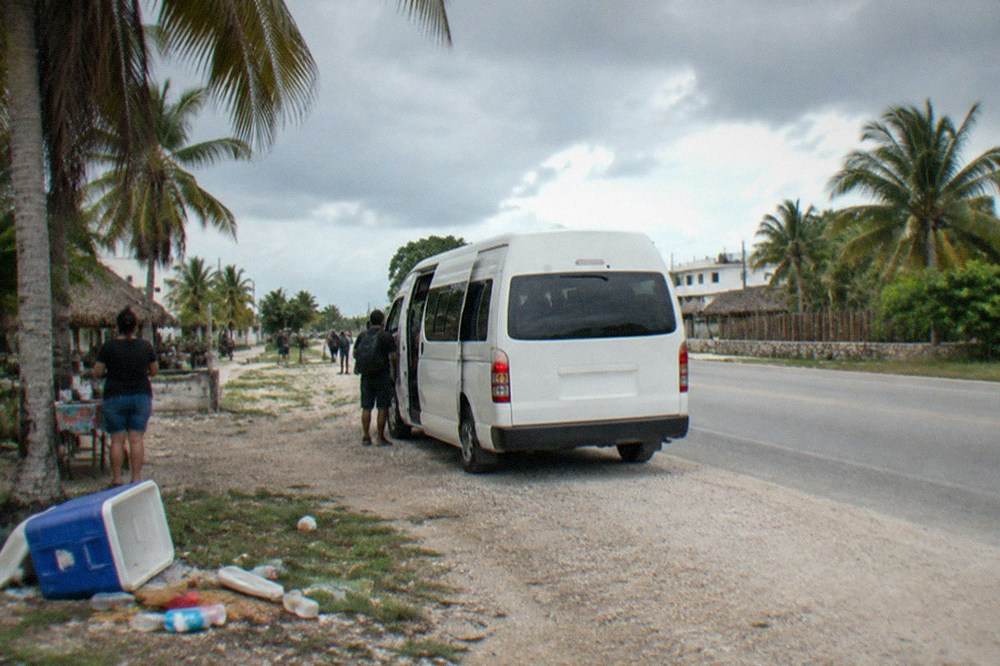
A guided tour answers most of the safety question because it bundles transport, route planning, operator vetting, timing, and local regulations into a single decision you make before departure, shifting responsibility to a company that handles those details daily rather than leaving you to verify each one yourself in an unfamiliar place. You are picked up, driven by someone who drives that road for a living, handed gear that fits, and walked through a site by a guide who knows which lines not to cross. For a first trip off the property it removes nearly every step where a solo visitor has to judge something unfamiliar.
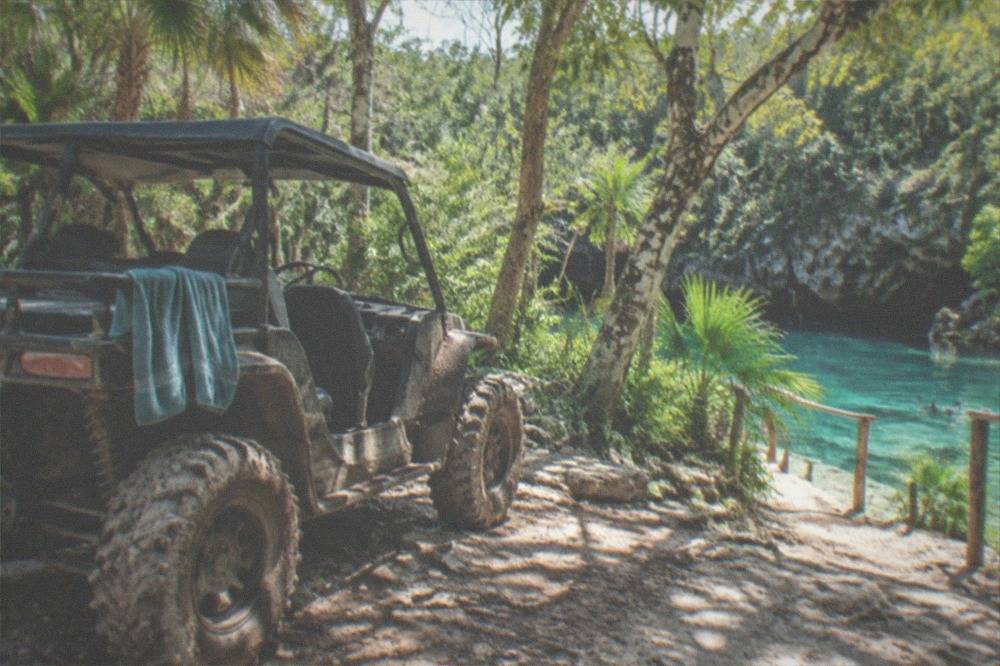
The review record is the useful part. An operator with hundreds or thousands of reviews has been stress-tested by that many strangers, and the roster's strongest products show exactly that pattern. The jungle buggy tour from Playa del Carmen, which pairs a drive through the jungle with a cenote swim, holds a 5.0 rating across 1,341 reviews and starts at $110.16, the highest-rated flagship among the buggy tours this site carries. That is the kind of track record that tells you the operator's pickups happen, the buggies run, and the cenote stop is managed. The full details, inclusions and live pricing sit on the jungle buggy tour page, and Check availability shows the operator's live listing.
The same logic scales up. A guest who is nervous about a first outing can start with a half-day product close to town and work up to the longer ruins-and-cenote circuits. For building that ladder, things to do beyond the resort gates lays out the full menu from downtown to day trips, sorted by how far each one takes you from the lobby.
What Rules Apply Once You Reach The Cenotes And Ruins?
Once you arrive at the cenotes and ruins, each site follows its own set of rules, including separate entry fees, posted swimming restrictions, and protected archaeological zones where climbing or touching structures may be prohibited. Some cenotes require life vests, and ruins often limit access to certain areas. Checking the posted signs and paying the correct fee at each entrance keeps your visit smooth and avoids problems with staff. Chichen Itza charges foreign adults roughly 676-697 MXN combined; Coba charges foreign visitors 210 MXN, with a reported local community fee of around 120 MXN at the gate; Tulum's components genuinely vary by source and day, so budget roughly 265-625 MXN and confirm the day-of total. Climbing the structures is prohibited at all of them.
Two rules catch visitors off guard more than any fee. The first is sunscreen: most managed cenotes, marine parks and protected sites in Quintana Roo enforce a biodegradable, mineral-based rule, and conventional sunscreen is commonly refused at entry or requires a rinse-off shower before you swim. Bring the reef-safe kind or buy it at the gate. The second is VISITAX, the Quintana Roo visitor tax of roughly 283 MXN, about $15, mandatory for foreign visitors of all ages, paid online at the official VISITAX portal before departure. It is generally not bundled into airfare, and it is owed whether or not you ever leave the resort.
For the full arrival-to-departure picture, fees, seasons, transport and site rules gathered in one place, the main Playa del Carmen travel guide is the reference this site builds everything else on. The short version of its safety section: the rules at the destinations are about protecting fragile water and heritage sites, not about protecting you from people, which tells you where the region's actual concerns lie.
The Easiest First Steps Off The Property
The easiest first steps off the property are the closest, most structured and most forgiving of a first-timer's caution: begin with a boat day on the water, then try a nearby cenote circuit, and save a full ruins circuit for after the first outing goes well. Each trip stays short, simple and low-pressure, so you build confidence before committing to anything bigger. Each of these runs on fixed schedules from central Playa del Carmen, with the operator handling everything between your meeting point and the destination, so the first time you navigate the region's logistics is also the last time you have to. Build the confidence in that order and the longer circuits feel routine by day three.
The Isla Mujeres cruise with beach club, snorkel, lunch and open bar is the easiest possible first step, a catamaran day that starts at $59. It is the most-reviewed product this site carries, 4.0 across 2,618 reviews, and the honest read of that rating is a huge, popular, volume operation that most guests enjoy and a minority find crowded. Both facts are true at once, which is exactly what a large review pool is for.
For the second outing, the Chichen Itza, Cenote Ik Kil, Coba Ruins small-group early access tour is the flagship of the ruins-and-cenote circuits: 4.5 across 987 reviews, from $165, with early access that beats the midday bus waves into Chichen Itza. It bundles the two archaeological sites and a swim at Ik Kil into one guided day, which is the full Riviera Maya proposition, ruins, jungle and water, in a single decision.
The pattern behind all of these is the actual answer to the question in the title. Leaving your resort in Riviera Maya is safe in the way any well-visited destination is safe: the risks that exist are ordinary, knowable and mostly managed by daylight, licensed transport and a booked itinerary. The guests who have the best trips are not the ones who never leave the lobby. They are the ones who leave it with a plan.
Common Questions About Leaving Your Resort In Riviera Maya
Is It Safe To Leave Your Resort In Riviera Maya?
Yes, for the overwhelming majority of guests, with ordinary precautions. Quintana Roo carries a Level 2, Exercise Increased Caution advisory, the same level as Mexico overall, and reported incidents center on local disputes away from tourist zones. Daylight outings, licensed transport and guided tours keep the practical risk low.
Is it safe to walk around Playa del Carmen at night?
Generally yes on the main pedestrian and tourist streets, which stay busy and well lit. The advisory's own wording is to pay attention to your surroundings after dark in downtown areas and remain in well-lit pedestrian zones, which describes Fifth Avenue and the surrounding blocks.
Are colectivos safe for resort guests?
Yes. They are the shared vans locals use every day, running roughly 50-80 MXN between Playa del Carmen and Tulum and leaving when full. Use them in daylight, keep valuables in a closed bag, and confirm the destination with the driver before boarding.
Do I need to pay VISITAX if I never leave the resort?
Yes. The tax of roughly 283 MXN, about $15, is mandatory for foreign visitors of all ages regardless of activities, and Mexican nationals and residents are exempt. It is paid online through the official portal before departure and is generally not bundled into airfare.
Are cenotes safe to swim in on a first trip out?
The managed ones are, and guided tours use those. Open cenotes suit beginners and families, while cavern systems like Chaak Tun and Dos Ojos run guided-only with gear included. Life jackets are included or required at most sites, and biodegradable sunscreen is the standard rule.
What happens if a storm affects a booked tour?
Operators cancel or rebook boat and cenote days when weather makes them unsafe, and the hurricane season runs June 1 to November 30 with peak activity August to October. Check the cancellation terms on the operator listing before you book, since rescheduling rules vary by tour.